Card BINs for ad payments: myths vs. reality
Before any money is charged, a Facebook or TikTok ad account knows which bank issued your card and in which country. It gets this from the card's BIN, the first 6 or 8 digits of the card number.
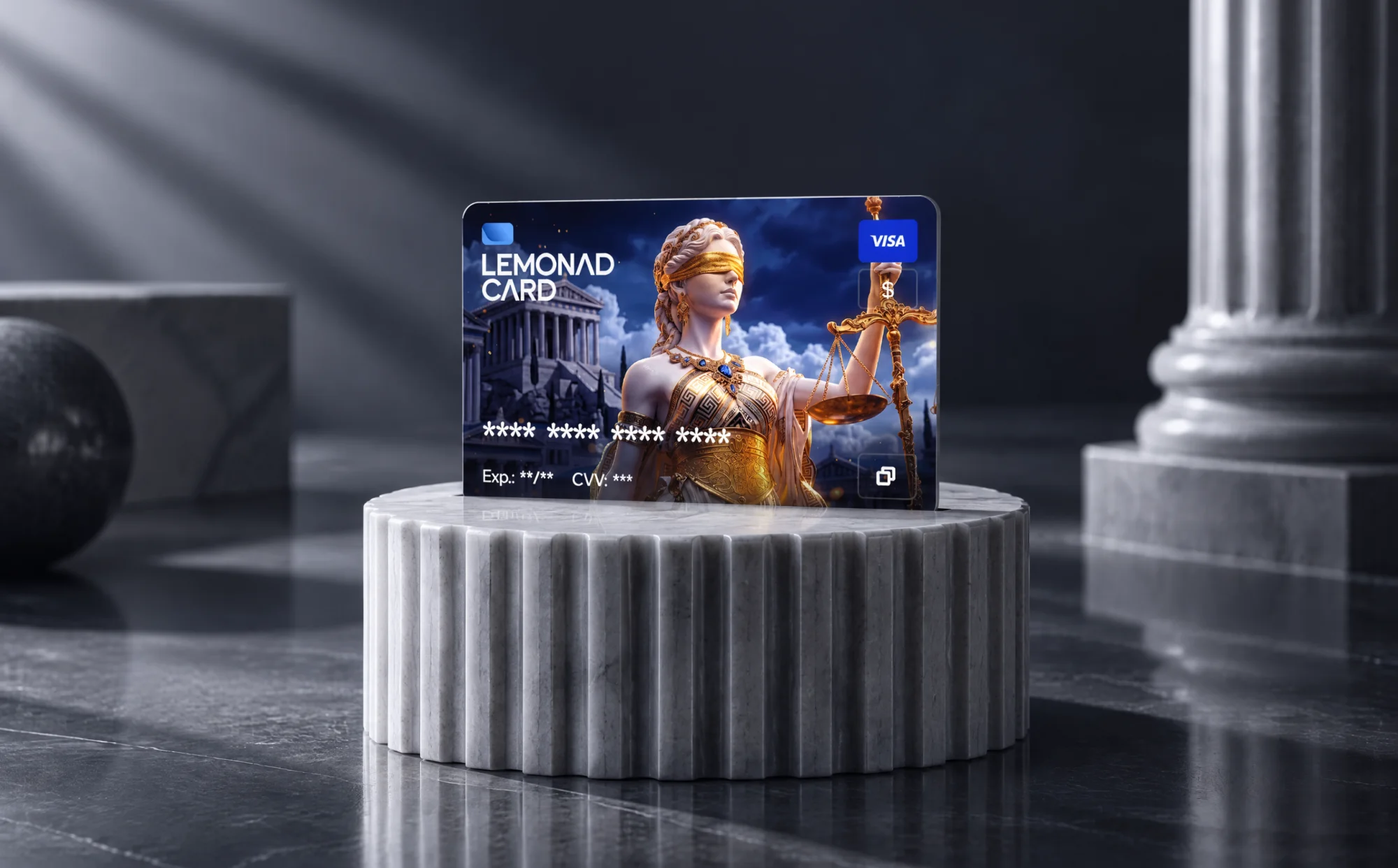
Lemonad Card is a virtual card service for anyone who pays for ads and online services, built by the team behind the Lemonad CPA network. Our clients ask us all the time which BIN to link to their ad accounts. There are plenty of myths around this question, and they often shape how people choose virtual cards for media buying.
Stable ad payments depend most on regular charges, a separate card for each ad account, and knowing why a payment was declined. A BIN alone doesn't guarantee that a payment will go through, and it doesn't affect ad review, CTR, or cost per lead.
Below, we look at the most common myths using data from our clients and answers from AI assistants. At the end, we cover the new US BINs in Lemonad Card and what to keep in mind when paying with them.
What is a card BIN
BIN stands for bank identification number. It's sometimes called an IIN (issuer identification number), but it's the same thing.
A BIN tells the payment processor and the platform the card network (Visa or Mastercard), the issuing bank, the card type (credit, debit, or prepaid), and the country of issue. This is standard payment infrastructure data, not a special tag for ad platforms.
Until 2022, a BIN was the first 6 digits of the card number. Banks are now gradually moving to 8 digits, while the card number itself stays the same length.
Many cards share the same BIN. So if cards with one BIN see frequent disputes, a platform may apply stricter checks to all of them.
What AI assistants say about BINs
Many people now turn to AI assistants for advice, so we asked five of them the same questions about BINs: Alice (Yandex's AI assistant), ChatGPT, Perplexity, Gemini, and Claude. This isn't a fact check, since a model's answer changes with how the question is worded. We wanted to see which opinions they repeat.
AI assistants mostly rely on blogs by virtual card providers and retell what's been circulating in media buying for years. They're also quick to adapt to whoever is asking. Hint that you prefer Singaporean BINs, and the answer shifts in their favor. Mention Estonia, and the assistant starts praising Estonian cards. Bring up the US, and US BINs suddenly come out on top. It looks like AI assistants don't have a favorite BIN, but they do have a favorite person to talk to: you.
These answers and our clients' questions add up to three myths. For each one, we separate what's known for sure from what we see among Lemonad Card clients.
Myth 1. US BINs are always better, especially for Facebook ads
This is the most popular myth. Many media buyers ask specifically for US BINs and are sure their traffic will perform better with them.
AI assistants only partly agree. Alice, Gemini, and Claude lean toward US BINs, although Alice adds a caveat right away:
Alice: "Yes, to a large extent: cards with a US BIN do go through more reliably in Facebook Ads and Google Ads, but it's not the only factor, and not even the main one."
ChatGPT and Perplexity are more cautious and say a US BIN doesn't always help. ChatGPT adds:
ChatGPT: "Partly yes, but not because Meta or Google officially prefer US BINs."
US BINs are new for us, so it's more telling to look at how our large clients pay. Our largest Facebook advertiser pays with Singaporean and Estonian cards and explains it this way: "I could see BINs being a problem with any other traffic source, but historically, Facebook hasn't been picky about them." A US BIN can help a payment go through, but it doesn't affect ad review, CTR, or campaign results.
Myth 2. A US ad account needs a US card
This myth sounds logical: if the account is American, the card should be too. All five AI assistants give exactly this advice, but they also admit that, technically, you can link a card from another country.
Some of our clients link cards from other countries to US ad accounts, and payments go through. One large client with US Facebook ad accounts puts most of their spend on Estonian cards. Another pays for AI tools, keeps their accounts in the US, and uses BINs from all three countries roughly equally. There are also clients who work only with US BINs, so it's best to test your own setup.
Myth 3. There's one BIN that works everywhere
In media buying chats, people talk about "premium" or "trusted" BINs that supposedly work on any platform and never get blocked. Four of the five AI assistants say outright that no such BIN exists.
Gemini: "No, there is no universal BIN that's guaranteed to work on 100% of platforms and never get blocked."
How any BIN performs changes over time and depends on the platform, the account country, and the currency. That's why it's a good idea to keep a backup card on a different BIN.
If your payments start getting declined, whether in Facebook Ads or elsewhere, don't rush to replace the card. Check the reason first. If the card ran out of funds, you hit a spending limit, or the payment needs 3D Secure confirmation, you can fix it on your side. A bank decline can also be temporary.
Which BINs Lemonad Card offers
Lemonad Card offers BINs from the US, Estonia, and Singapore. US cards can be issued on Visa or Mastercard, and Estonian and Singaporean cards on Visa only.
All cards support 3D Secure, an extra step to confirm a payment, but it works differently depending on the country. If you pay not only for ads but also for other services, keep this in mind when choosing a card.
All cards are issued in US dollars, so dollar payments have a 0% transaction fee on cards from all three countries. If a platform charges in another currency, a conversion fee applies. US cards may also have a cross-border fee, which we explain below.
| US | Estonia | Singapore | |
|---|---|---|---|
| Conversion fee for non-USD payments | 2.5% | 2% | 0.5% |
| Cross-border fee | 0.90% + $0.43 per transaction if the platform is outside the US | — | — |
| 3D Secure | automatic | automatic for ad payments, one-time code for other purchases | automatic for subscriptions and other recurring payments, one-time code for other purchases |
New US BINs in Lemonad Card
Lemonad Card has recently added new US BINs, so you can now issue cards on BINs from three countries. US cards come in handy if that's all you work with. And if you already pay with Estonian or Singaporean cards, you can issue a US card, run a small budget through it, and see which card gets fewer declines and lower fees on your ad accounts.
What to keep in mind when paying with US BINs
US cards have a cross-border fee, an international transaction fee. It applies when the platform or service you pay is based outside the US, even if you pay in dollars. That's why US cards work best for dollar payments to US-based platforms. If your ad account charges in another currency or the platform is based in another country, it pays to keep Singaporean or Estonian cards on hand.
You can issue a virtual card for ads on US, Estonian, or Singaporean BINs by submitting a request on the Lemonad Card website.